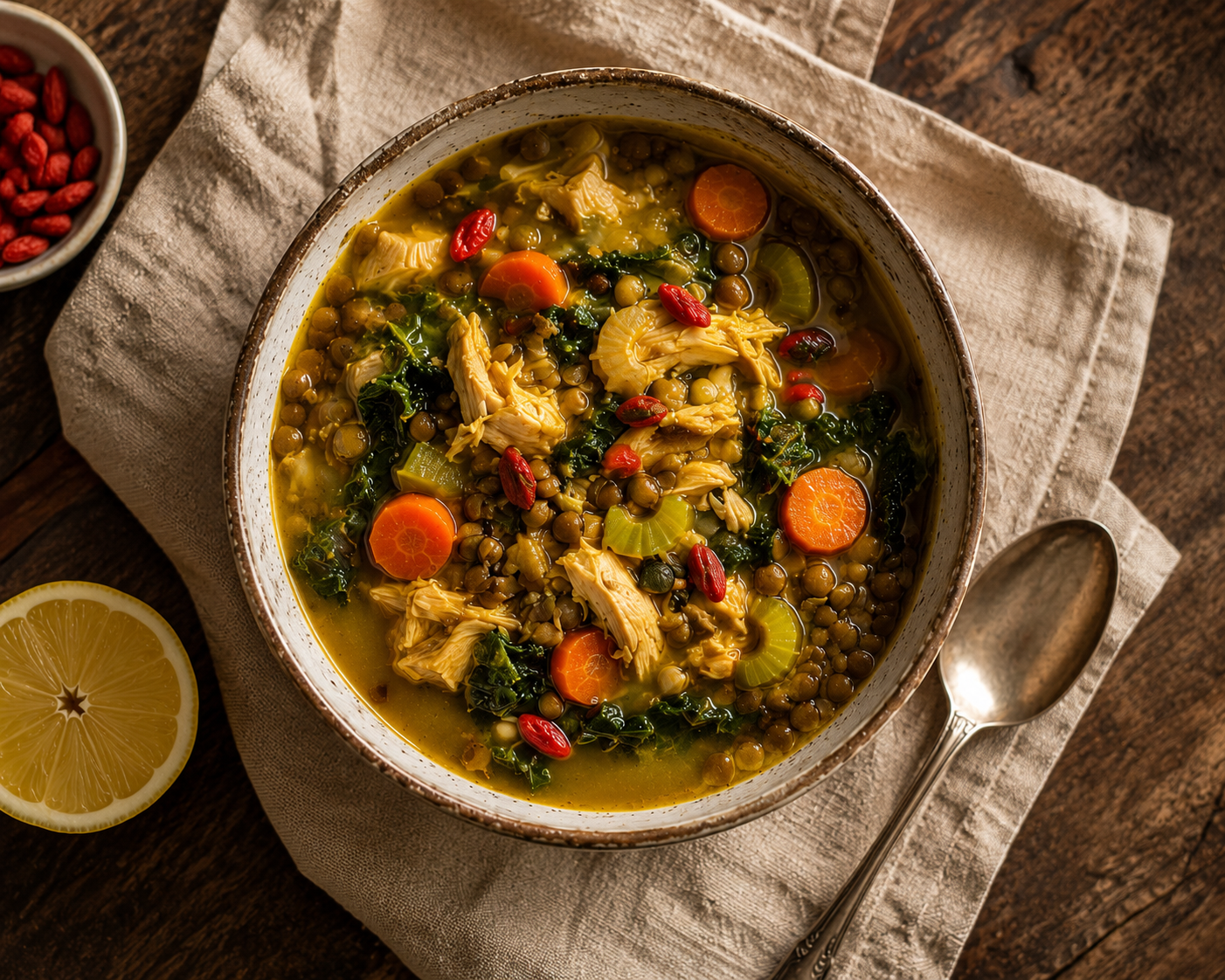
My weeknight lesson in extraction — getting more flavour out of what is already in the pot instead of adding more things to it.
The broth here comes out deep gold and properly savoury for two reasons, and neither of them is expensive. The turmeric and ginger spend a full minute in hot oil with the onions before any liquid arrives, and the chicken is thigh meat, which gives up collagen under pressure and leaves the broth with real body. The lemon and greens go in with the burner already off, so it tastes finished rather than stewed.
It is better on day two, it freezes beautifully, and it is the recipe I keep using to practise seasoning by taste rather than by measurement.


Chicken, Lentil & Greens Soup (Instant Pot)
Ingredients
Method
- Set the Instant Pot to Sauté. Heat the oil, soften the onions, then add garlic, ginger and turmeric and stir for a minute until fragrant. Hit Cancel.
- Add the chicken, carrots, celery, lentils and broth. Season and stir to combine.
- Seal the lid, set the valve to Sealing, and pressure cook on High for 20 minutes.
- Let the pressure release naturally for 10 minutes, then carefully vent the rest.
- Remove the chicken, shred with two forks, and return it to the pot.
- Set to Sauté again, stir in the greens for 2–3 minutes until wilted, turn off, then stir in the lemon juice. Taste and adjust salt.
Notes
What I was practising: blooming and body
Blooming is the step almost every recipe skips and almost every good cook insists on. A lot of what you want out of turmeric, ginger, paprika or curry powder lives in fat-soluble compounds — curcumin in turmeric is the obvious one — and those compounds simply will not come out into water. Thirty to sixty seconds in hot oil pulls them into the fat, and the fat then disperses through the whole pot. The same spoonful of turmeric gives you two completely different soups depending on whether it went into the oil or into the broth.
Body is the other thing I was chasing. Chicken thighs carry more fat and far more connective tissue than breasts, and under pressure that connective tissue converts to gelatin. Gelatin is what makes a broth coat the back of a spoon and feel rich in your mouth without a drop of cream or a spoon of flour. If you have ever wondered why your homemade soup tastes correct but feels thin, this is usually the answer.
Two more things worth knowing
Cold flattens salt. Your perception of saltiness drops noticeably as food cools, which is why leftovers taste under-seasoned straight from the fridge and why you should never season a soup you intend to chill based on a cold spoonful. Reheat properly, then taste, then adjust.
Want it thicker without cream? Ladle out a cup of the lentils and broth, blend it smooth, and stir it back in. You are thickening with the starch that is already in the pot rather than adding fat, and it keeps the soup tasting like itself.
Next on the list for this one: swapping in dried chickpeas to see how much longer they need under pressure before they stop being gravel.

Leave a Reply